


 By
By The healthcare industry is evolving rapidly — and one of the biggest shifts in recent years is the rise of remote healthcare jobs. Thanks to digital transformation, telehealth technologies, and changing workplace dynamics, more healthcare professionals are now able to work from home than ever before.
From telemedicine and health data management to insurance support and patient care coordination, there are countless remote opportunities for both clinical and non-clinical professionals.
If you’re interested in joining this growing field, this guide will walk you through everything you need to know — including job types, qualifications, salaries, and essential skills for success.
Why Remote Healthcare Jobs Are Growing
Several factors have contributed to the expansion of remote roles in healthcare:
- Telehealth adoption: Since the pandemic, virtual consultations and digital patient care have become standard in many medical facilities.
- Electronic health records (EHR): The shift from paper to digital systems allows healthcare data to be managed and accessed remotely.
- Workforce flexibility: Healthcare organizations now recognize that not all roles require physical presence.
- Cost efficiency: Remote work helps reduce operational costs for hospitals, clinics, and insurers.
- Aging population: Increased demand for healthcare services means more administrative and support roles can be filled online.
This trend has created a wide range of remote and hybrid jobs, giving professionals the chance to balance meaningful work with greater flexibility.
Common Types of Remote Healthcare Jobs
Remote healthcare work covers a diverse range of roles — from licensed clinical positions to administrative and technology-based jobs. Below are some of the most common categories:
Telehealth Nurse or Physician
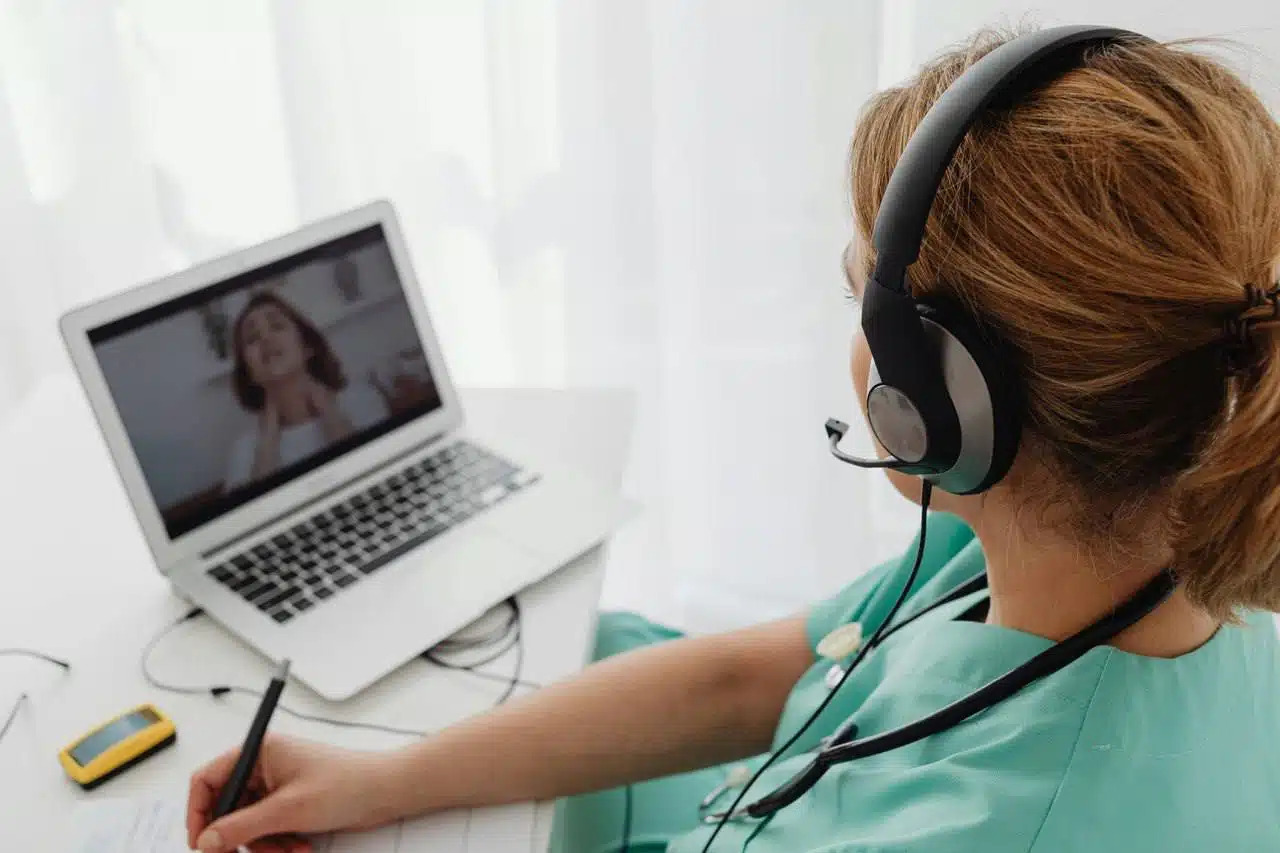
Telehealth professionals provide patient consultations via video or phone. Duties include assessing symptoms, offering medical advice, and following up on treatment plans.
Requirements:
- Valid nursing or medical license
- Experience in patient care
- Strong communication and computer skills
Typical Employers: Hospitals, telemedicine startups, insurance companies, and private practices.
Medical Coder and Biller
Medical coders translate healthcare procedures and diagnoses into standardized codes for billing and insurance purposes. Many healthcare billing specialists work entirely online.
Requirements:
- Certification such as CPC (Certified Professional Coder)
- Knowledge of ICD-10 and CPT codes
- Attention to detail and accuracy
Why It’s Great: Medical coding is one of the most accessible entry points for non-clinical remote healthcare work.
Health Information Technician
These professionals manage and organize patient data using electronic health record systems (EHR). They ensure confidentiality, accuracy, and compliance with healthcare regulations such as HIPAA.
Requirements:
- Degree or certification in health information management
- Knowledge of EHR software (Epic, Cerner, etc.)
- Understanding of data privacy standards
Medical Transcriptionist
Transcriptionists listen to voice recordings from healthcare providers and convert them into written reports. Although automation is reducing demand, skilled transcriptionists are still needed for specialized medical fields.
Requirements:
- Training in medical terminology
- Excellent typing and grammar skills
- Familiarity with transcription software
Healthcare Customer Service Representative
These professionals handle patient inquiries, schedule appointments, explain billing, and provide insurance information.
Requirements:
- Strong communication and problem-solving skills
- Experience with healthcare systems or customer support
- Ability to work in fast-paced environments
Why It’s Popular: Many positions are entry-level, making them great for people starting a healthcare career remotely.
Medical Writer or Health Content Specialist
Medical writers create educational materials, blogs, or research summaries for healthcare organizations, pharmaceutical companies, and health tech platforms.
Requirements:
- Background in healthcare, science, or journalism
- Strong research and writing skills
- Ability to translate complex medical topics into clear language
Healthcare Recruiter or HR Specialist
Recruiters help hospitals and healthcare companies find qualified professionals. The role can be done fully online, involving candidate screening, interviews, and job placement coordination.
Requirements:
- HR or recruiting experience
- Knowledge of healthcare roles and credentials
- Excellent communication and organizational skills
Clinical Research Coordinator (Remote or Hybrid)
Some research roles involve remote monitoring of studies, data analysis, and regulatory documentation.
Requirements:
- Degree in life sciences or healthcare
- Knowledge of clinical trials and regulatory guidelines
- Strong data management skills
Qualifications and Education
Remote healthcare roles vary widely in educational requirements:
| Job Title | Typical Education | Certification Needed |
|---|---|---|
| Telehealth Nurse | Nursing degree | RN or NP license |
| Medical Coder | Certificate or Associate degree | CPC, CCA, CCS |
| Health Information Technician | Associate or Bachelor’s | RHIT or RHIA |
| Medical Writer | Bachelor’s in science, communication, or related field | Optional |
| Healthcare Customer Service Rep | High school diploma or higher | On-the-job training |
| Recruiter / HR Specialist | Bachelor’s in HR or business | Optional |
| Clinical Research Coordinator | Bachelor’s in life sciences | ACRP or SOCRA (optional) |
Whether you’re a healthcare professional looking for a career change or a recent graduate, there are remote roles suited to many levels of experience.
Average Salaries for Remote Healthcare Jobs (2025 Estimate)
| Role | Estimated Annual Salary (USD) | Notes |
|---|---|---|
| Telehealth Nurse | $65,000 – $95,000 | Based on experience and state licensing |
| Medical Coder | $45,000 – $65,000 | Entry to mid-level |
| Health Information Technician | $50,000 – $70,000 | Depends on certifications |
| Medical Writer | $60,000 – $90,000 | Freelance or full-time |
| Healthcare Customer Service Rep | $38,000 – $52,000 | Entry-level |
| Recruiter / HR Specialist | $55,000 – $80,000 | Experience-based |
| Clinical Research Coordinator | $60,000 – $85,000 | Often hybrid |
Note: Salaries may vary by location, experience, and employer type.
Key Skills for Remote Healthcare Professionals
Working remotely in healthcare requires not only technical or clinical expertise but also self-management and digital communication skills.
Here are some essential abilities to cultivate:
- Digital literacy: Familiarity with EHR systems, telehealth platforms, and video conferencing tools.
- Time management: Ability to prioritize tasks without direct supervision.
- HIPAA compliance: Understanding how to protect patient confidentiality in virtual environments.
- Communication: Clear, empathetic interaction with patients and colleagues via phone or video.
- Adaptability: Willingness to learn new technologies and adjust to changing workflows.
- Attention to detail: Especially important for documentation, coding, and billing roles.
Pros and Cons of Remote Healthcare Work
Advantages
- Better work-life balance
- Flexible hours (for many roles)
- Reduced commuting time and expenses
- Access to national job markets (not limited by geography)
Challenges
- Limited face-to-face interaction with patients or coworkers
- Data security and privacy responsibilities
- Need for reliable internet and home office setup
- Possible isolation or burnout from remote work
Understanding both sides helps you decide whether remote healthcare is right for you.
How to Find Legitimate Remote Healthcare Jobs
There are many trustworthy job platforms listing remote healthcare opportunities:
- Indeed.com – Search “remote healthcare” or “telehealth” positions.
- LinkedIn Jobs – Filter for “remote” and “healthcare industry.”
- FlexJobs – Focuses on verified remote and flexible work positions.
- SimplyHired and Glassdoor – Include both entry-level and specialized listings.
When reviewing job posts, watch out for red flags such as requests for upfront payment, vague job descriptions, or unrealistic salary promises. Always verify the company’s legitimacy before sharing personal information.
Final Thoughts
The healthcare industry is no longer confined to hospital walls. With telehealth, digital records, and cloud-based patient management systems, professionals across medical, administrative, and technical fields now have opportunities to build fulfilling careers from home.
Whether you’re a nurse looking to transition into telehealth, a recent graduate entering healthcare administration, or a tech specialist supporting medical systems — remote healthcare jobs open new doors for flexible, meaningful, and future-proof work.
Take the time to research, build your skills, and explore verified employers offering legitimate opportunities. The future of healthcare is not only digital — it’s remote.